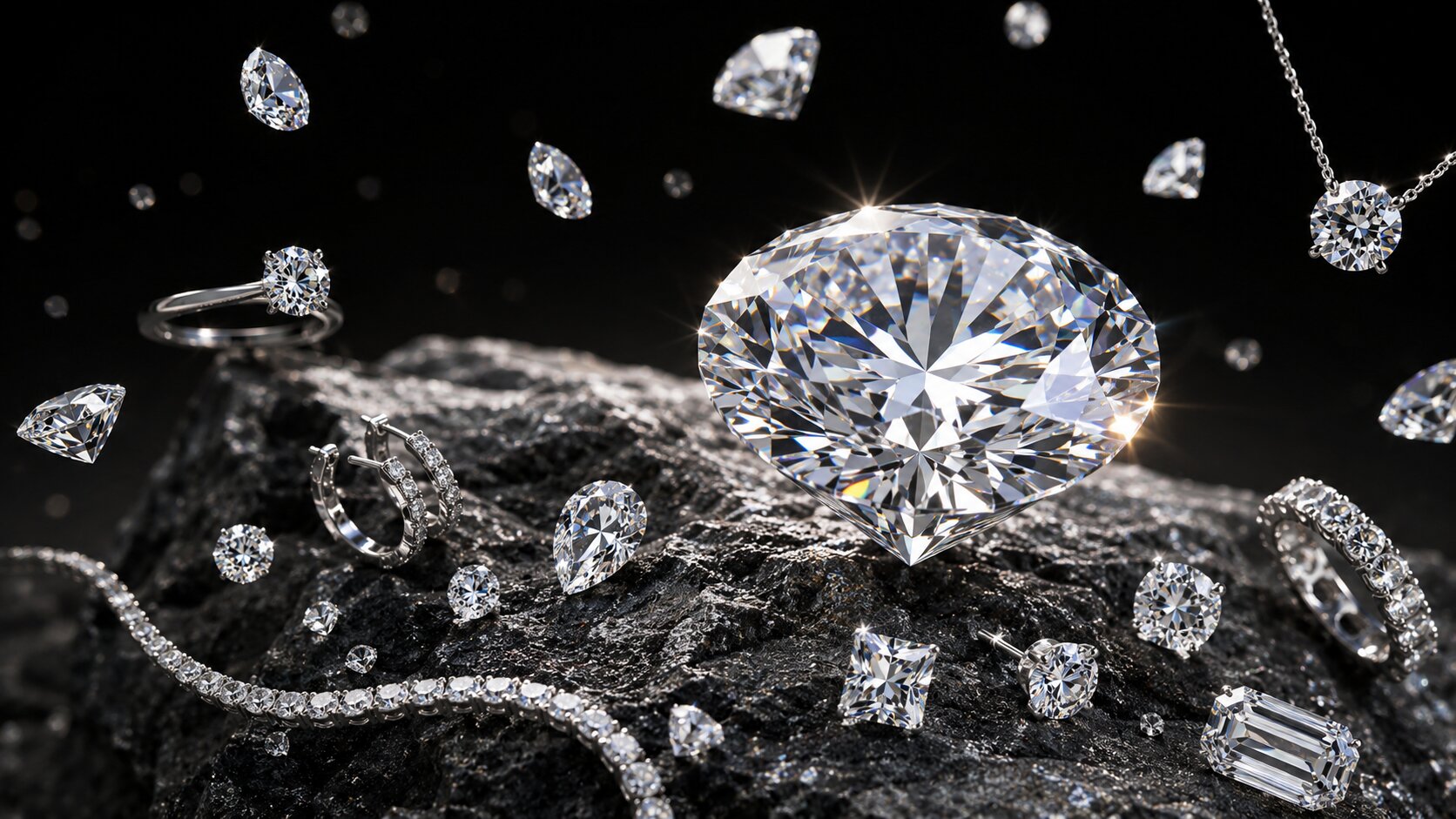
What 'certified' really means
A diamond certificate is an independent report describing a stone's characteristics — its carat weight, cut, colour, clarity, measurements and any treatments. It does not set a price; it describes the stone so you can compare like for like and know exactly what you are paying for. In Turkey, as everywhere, the word that matters is independent: the grading should come from a recognised laboratory, not from the seller's own opinion.
When you buy a certified diamond from us, we show you the certificate and let you match every detail to the stone in front of you under the loupe.
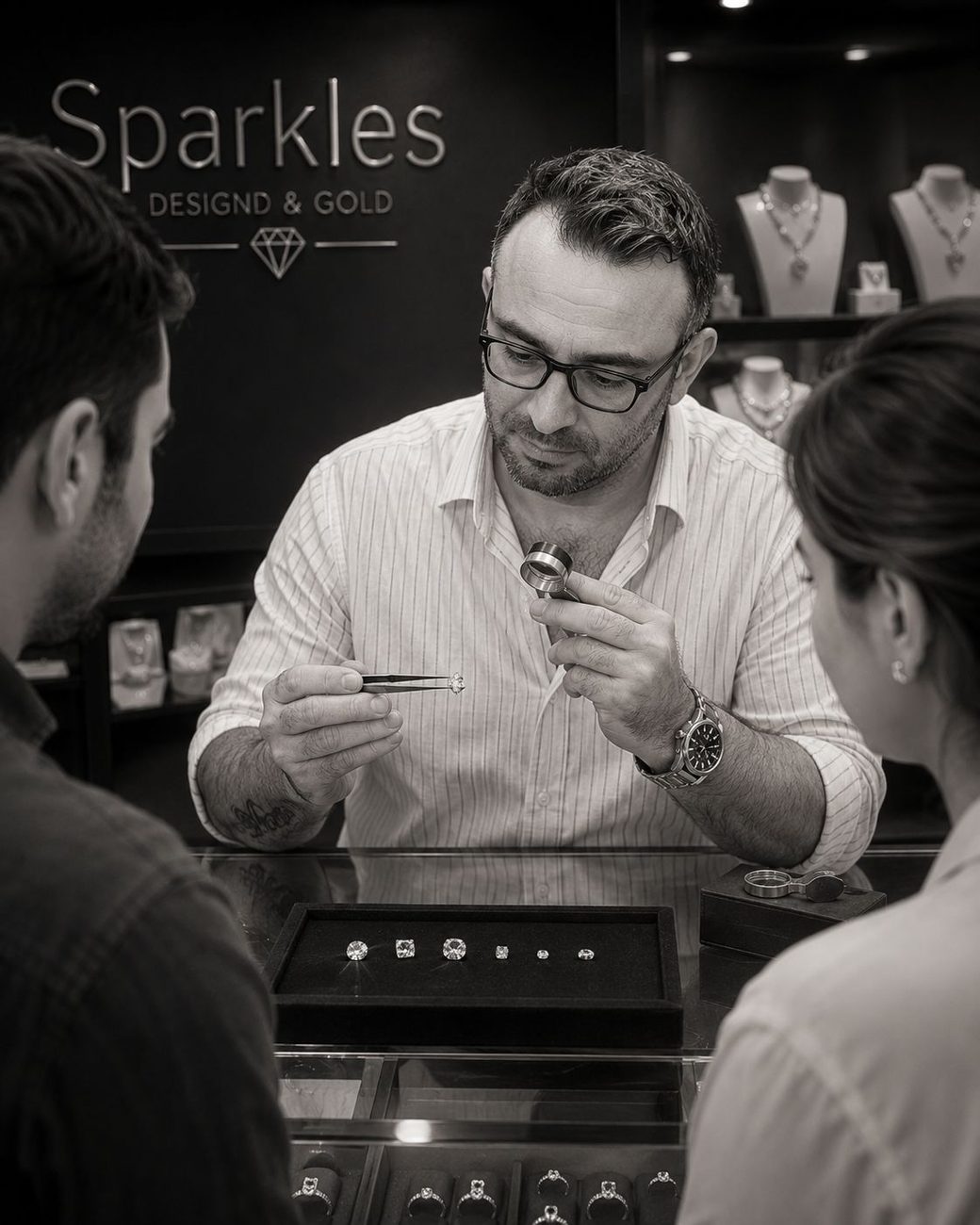
The 4 Cs, in plain English
Cut is the craftsmanship of the stone and the biggest driver of sparkle. Two diamonds of identical weight can look completely different depending on cut. Colour is graded from D (colourless) downward; G to H stones look white to the naked eye at a fraction of the price of D. Clarity describes natural inclusions; VS and SI stones are typically 'eye-clean' — flawless to look at without magnification. Carat is weight, and price rises sharply at the round numbers, so buying just under (0.90, 1.40, 1.90) can save a great deal for a stone that looks the same on the hand.
Choosing the right balance for your budget
The art of buying well is balancing the four Cs. For most people, prioritising cut, accepting a near-colourless G–H, choosing an eye-clean SI clarity, and buying just under a round carat weight produces a stunning diamond at a sensible price. A good goldsmith will steer you to this balance rather than upselling you on a grade you cannot see.
Questions to ask any jeweller in Turkey
Ask: Is the diamond certified, and may I see the report? Can you show me the stone under a loupe and explain its grades? Is the gold weighed and priced at today's rate? What is the making charge? Do you offer a guarantee and free resizing? Will you provide a receipt and the certificate to take home? A trustworthy jeweller answers all of these openly and without pressure.
Bringing your diamond home: customs and VAT
Jewellery you buy on holiday is generally yours to wear home, but rules vary by country and change over time, so check your own customs allowances before you travel. Keep your receipt and certificate together — they prove what you bought and its value. For higher-value pieces, ask us about insured shipping with documentation, which some travellers prefer to carrying a valuable item through airports.
This is general information, not legal advice — always confirm the current allowances for your destination country.
Spotting a trustworthy jeweller
The signs are consistent the world over. A permanent workshop and a long local reputation. Willingness to explain, show and certify. Pricing broken into gold and stone. No pressure, and a genuine welcome to come back tomorrow. At Muharrem Çakır these have been the rules since 1985 — which is why so many of our customers are the children and grandchildren of customers from decades ago.
Buying remotely before you arrive
You don't have to wait until you're standing in the shop. Many visitors message us before their holiday with what they're looking for, and we have a selection of certified stones ready to compare when they arrive — or we begin a bespoke design so the finished piece is ready before they fly home. You can also get an instant indicative price using the tool on our Made-to-Order page.
Natural vs lab-grown diamonds
One question that comes up more every year is the difference between natural and lab-grown diamonds. Both are real diamonds — chemically and optically identical carbon. The difference is origin: one formed over billions of years in the earth, the other was grown in a few weeks in a reactor. Lab-grown stones are considerably cheaper for the same size and grade, but they do not hold value the way a natural diamond does, and many buyers still prefer the romance and rarity of a natural stone for something like an engagement ring.
Neither is 'fake' — but you must be told which you are buying, and the price must reflect it. A trustworthy jeweller will state plainly whether a stone is natural or lab-grown and certify it accordingly. If a price seems remarkable for the size, ask this question directly: is this natural or lab-grown? The honest answer tells you a great deal about the seller.
Reading a diamond certificate line by line
A certificate can look intimidating, but the lines that matter are few. Carat weight is the measured weight to two decimal places. Shape and cutting style describe the outline (round brilliant, oval, emerald and so on). The cut grade — where present, usually on round stones — runs from Excellent down; aim high here, because cut drives sparkle. Colour is a letter from D; clarity is a code such as VVS, VS or SI. Measurements and proportions describe the stone's dimensions. There may also be a note on fluorescence and any treatments. Match the certificate's measurements and any unique inclusions to the actual stone so you know the paper belongs to the diamond in front of you.
Treatments and what to avoid
Some diamonds are treated to improve their apparent clarity or colour — for example fracture filling or certain colour treatments. These are not necessarily scams, but they must be disclosed, they affect value significantly, and treated stones can require special care. The rule is simple: insist that any treatment is stated in writing on the receipt and certificate. An undisclosed treatment is the one genuine danger to guard against, and it is exactly why certification and an honest seller matter so much.
Paying safely and getting the right paperwork
When you buy, make sure you leave with three things: an itemised receipt showing the price (ideally broken into gold and stone), the diamond certificate, and a clear statement of any guarantee and aftercare. Keep the receipt and certificate together — you will need both for insurance at home and for any future valuation or resale. Pay by a method that gives you a record. A reputable goldsmith will provide all of this without being asked; if paperwork is vague or 'will be sent later', be cautious.
Insuring your diamond at home
Once your certified diamond is home, add it to your household insurance or take out a specific jewellery policy, using the certificate and receipt as proof of specification and value. Photograph the piece. For higher-value items, an updated valuation every few years keeps your cover accurate as gold and diamond prices move. None of this is complicated, but it protects a meaningful purchase — and it is far easier when you bought from someone who gave you proper documentation in the first place.
Why buying from the maker simplifies all of this
Every step above — certification, disclosure, honest pricing, proper paperwork, aftercare — is easier when you buy from the goldsmith who made the piece. There is one person accountable for the stone, the setting and the documents, and that person's local reputation depends on getting it right. That is the quiet advantage of buying a certified diamond from a established Marmaris workshop rather than an anonymous counter: accountability you can shake hands with.
Visiting Marmaris? See certified diamonds explained honestly and design a piece within your holiday.
Made to order Message on WhatsApp