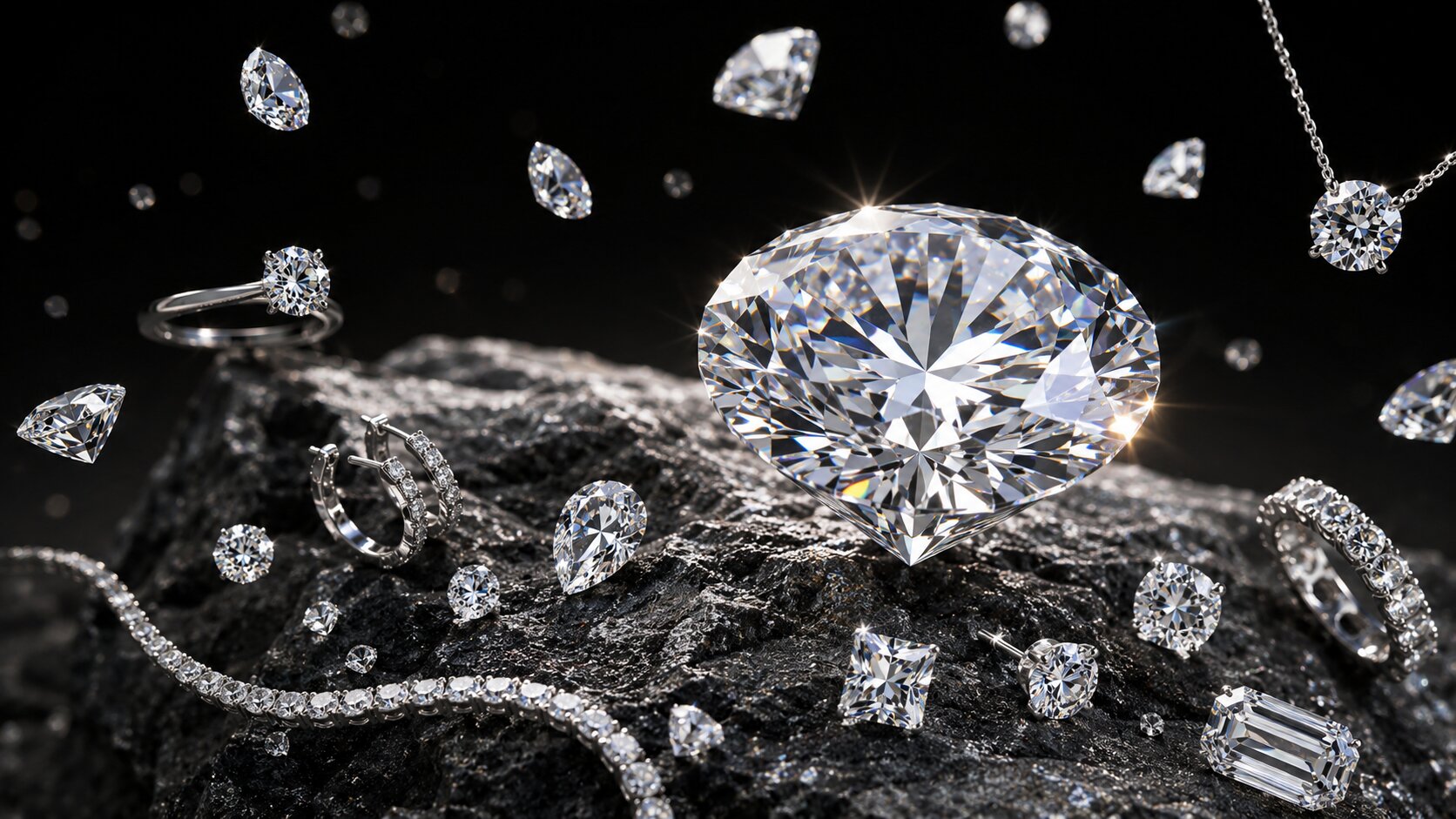
How a diamond's price is actually built
There is no single 'diamond price'. The cost of a finished diamond ring in Marmaris in 2026 comes from two clear parts: the diamond, priced on its four Cs, and the gold or platinum, priced by weight at the day's market rate plus a making charge for the craftsmanship. Once you understand those parts, a quote stops being mysterious and becomes something you can check.
We deliberately quote in those two parts so you can see exactly where your money goes — and so you can compare confidently against prices back home.
What moves the diamond part of the price
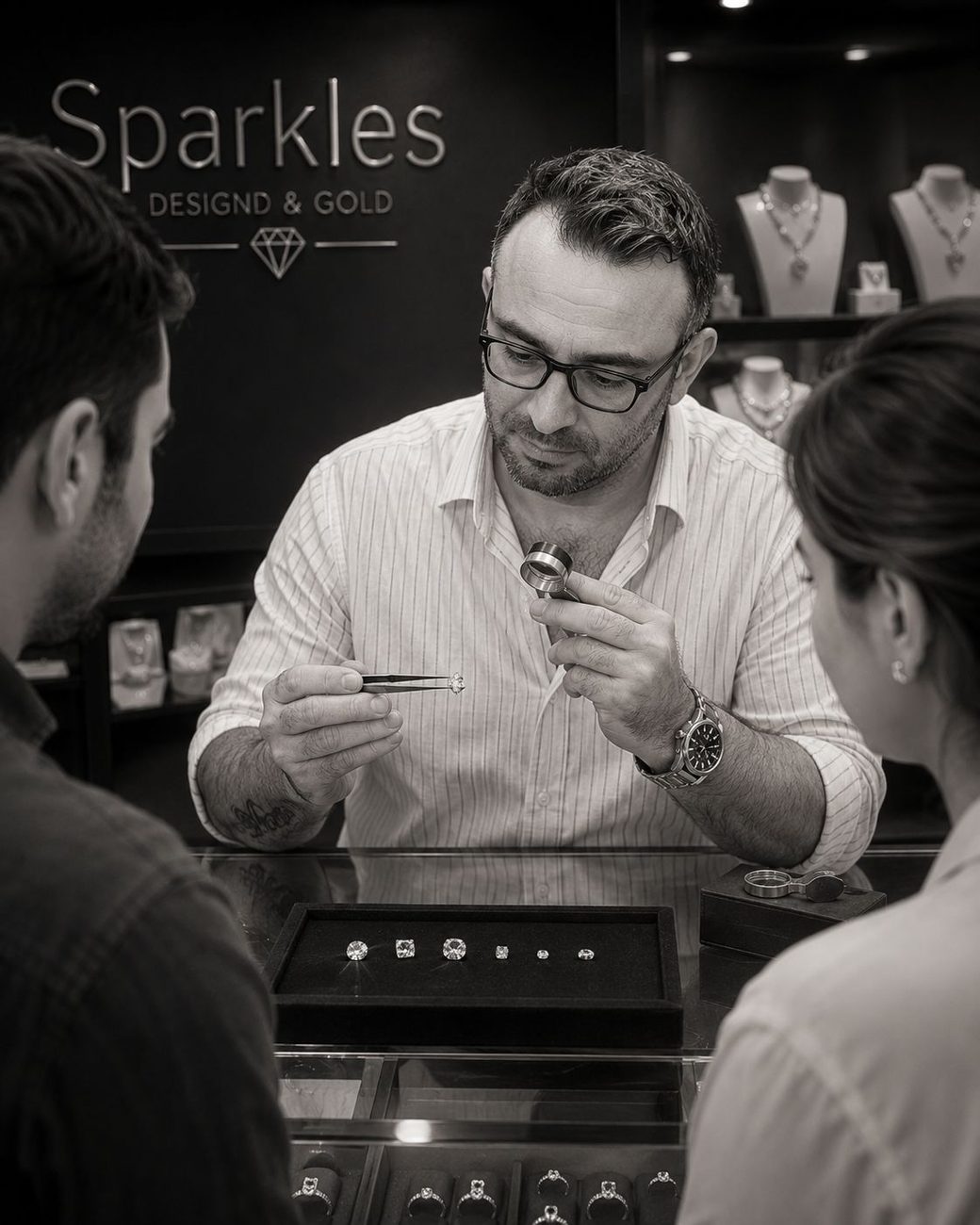
Carat weight has the biggest headline effect, and prices step up sharply at the round numbers — which is why a 0.90ct can cost noticeably less than a 1.00ct that looks nearly identical on the finger. Cut quality, colour grade and clarity grade then fine-tune the figure. A beautifully cut, eye-clean, near-colourless stone just under a round weight is almost always the smart buy.
What moves the gold part of the price
Gold is a global commodity, so the metal cost tracks the daily market and the karat you choose — 22k contains more gold than 18k, which contains more than 14k. On top of the metal sits the making charge: the labour of forging, setting and finishing by hand. Because we are the goldsmith, that labour is charged honestly and openly, not marked up by a reseller.
Why buying from the maker is better value in 2026
On a Western European high street, a diamond ring passes through a manufacturer, a distributor and a retailer, each adding margin. In our Marmaris workshop, the stone goes from our hand to yours. Remove those layers and, for a comparable certified stone and the same gold weight, the price is frequently meaningfully lower — without compromising on certification or craftsmanship.
How to read a fair quote
A fair quote in 2026 should: state the diamond's carat, cut, colour and clarity; state the metal, karat and approximate weight; separate the gold price from the making charge; and mention certification, guarantee and aftercare. If a price is a single round number with none of that detail, ask for the breakdown. A trustworthy goldsmith will give it gladly.
Get an instant estimate before you visit
You can see an indicative figure right now, in your own currency, using the live tool on our Made-to-Order page — choose the piece, the metal, the stone and the carat, and it shows an honest estimate. We then confirm the exact price once we choose the actual stone together. Prices on the site update live to pounds, euros, dollars, roubles or lira so there are no surprises.
Gold and diamond markets move, so treat any figure as a guide until we've chosen your stone — but the way we build the price will always be the same: open, in two parts, and honest.
A worked example: a one-carat solitaire
Imagine a classic one-carat round brilliant solitaire in 18k white gold. The price has two clear parts. First, the diamond: a well-cut, eye-clean (SI), near-colourless (G–H) one-carat natural stone sits in a particular market range; choosing 'just under' at 0.90ct, or accepting a slightly lower colour, moves that figure down noticeably while looking near-identical on the hand. Second, the metal and making: an 18k white gold solitaire setting uses a few grams of gold priced at the day's rate, plus the making charge for forging and setting it by hand. Add the two parts and you have your price — and because we quote it that way, you can see exactly what each part costs.
The same exercise works for any piece. A pair of diamond stud earrings is two smaller stones plus a little gold and labour. A diamond eternity ring is many small stones plus the band. Once you think in 'stone plus gold plus making', no quote is a mystery.
Why round carat weights cost more
Diamond prices do not rise smoothly with size — they jump at the psychologically important weights, especially at the full and half carats. A 1.00ct stone commands a premium simply because it crosses the magic '1 carat' line. A 0.90ct stone is only one tenth lighter — a difference you cannot see on a finger — yet can cost meaningfully less per carat. Buying just under a round weight is one of the easiest ways to get a bigger-looking, better-cut diamond for the same money, and a good goldsmith will point this out rather than steer you to the round number.
How the daily gold price affects you
Because gold trades globally and continuously, the metal portion of any piece reflects the day's market. In practice this means small day-to-day movement, not wild swings, and we always quote at the honest current rate. It also means there is genuinely no benefit to a seller hiding the gold price — it is public. A jeweller who weighs your gold openly and prices it at the day's rate is simply being transparent about a number you could look up yourself. One who quotes only a single mysterious total may be relying on you not to.
Comparing a Marmaris quote with home
To compare fairly with a UK or European price, line up like with like: same carat, same cut grade, same colour and clarity, same metal and karat. A high-street ring at home includes the manufacturer's margin, the distributor's margin and the retailer's margin, plus the cost of a shop on an expensive street. A Marmaris goldsmith's quote includes the stone, the gold and the maker's own labour — and little else. When you compare matched specifications rather than headline prices, the value of buying from the maker becomes obvious.
Spotting a price that is too good to be true
Honest value is one thing; impossible bargains are another. If a 'one-carat diamond ring' is priced far below what the stone alone should cost, something is being left unsaid — it may be lab-grown (and fine, if disclosed), heavily treated, a lower grade than implied, or simply not what it is claimed to be. The defence is always the same: ask for the certificate, ask natural or lab-grown, ask for the price split into gold and stone, and buy from someone whose reputation in town is worth more than one quick sale.
Budgeting with the live estimate tool
The most useful thing you can do before visiting is set a budget and see roughly what it buys. The live estimate tool on our Made-to-Order page lets you pick the piece, metal, stone and carat and shows an indicative figure in your own currency — pounds, euros, dollars, roubles or lira. It will not replace choosing the actual stone with us, but it turns 'I have no idea what this costs' into 'I know the ballpark and what trade-offs move it', which is exactly the confidence you want walking in.
Visiting Marmaris? See certified diamonds explained honestly and design a piece within your holiday.
Made to order Message on WhatsApp